Free · no sign-up
The free robotics
library.
Guides for parents, printable games for little engineers, at-home challenges and a robotics glossary — written by Maple Mind instructors.
22 resources
 Guide
Start here · K–12 · 5 min
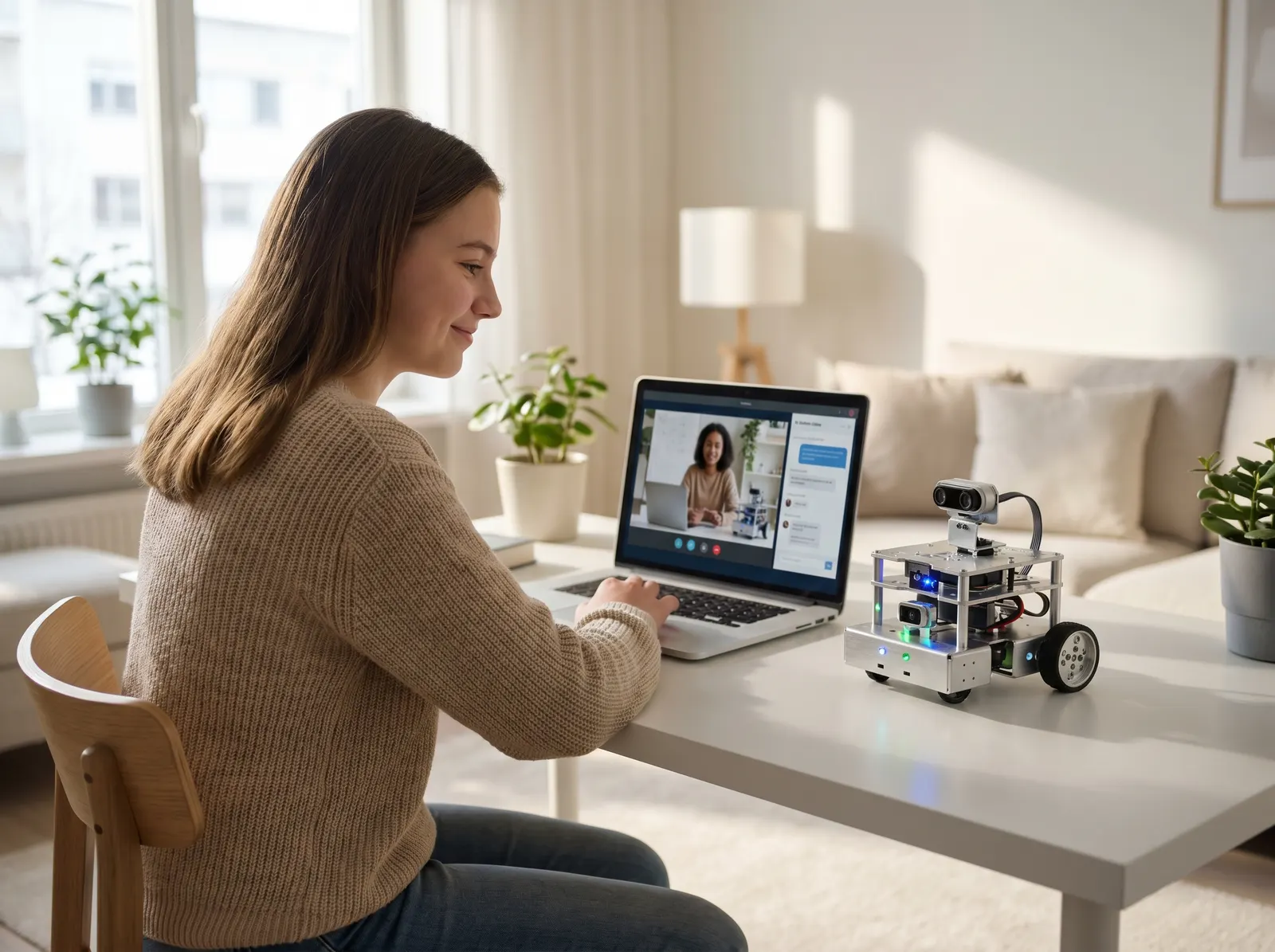
How online robotics classes work (and why they work)
What actually happens in a live online robotics class, how on-demand missions fit in, and what your child builds each month.
Read guide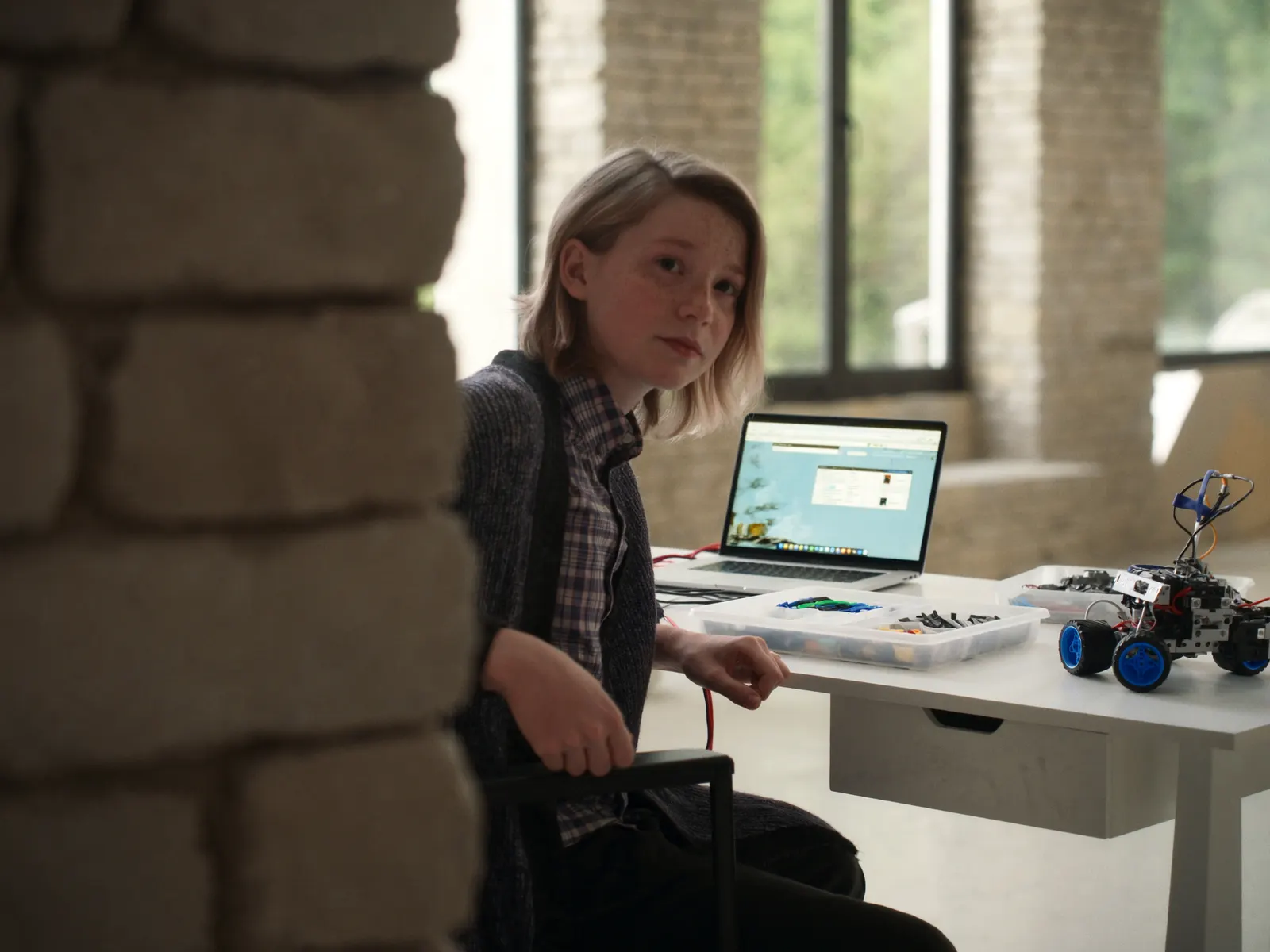 Guide
Parents · K–12 · 4 min
Does my child need a robot kit to start robotics?
Short answer: not at first. Here is when a kit starts to matter, which one fits which level, and what to do before you buy.
Read guide Guide
Start here · K–12 · 6 min
Robotics by grade: what kids can build from Kindergarten to Grade 12
A grade-by-grade map of what children learn and build in robotics, from first sequences in Kindergarten to autonomous robots in high school.
Read guide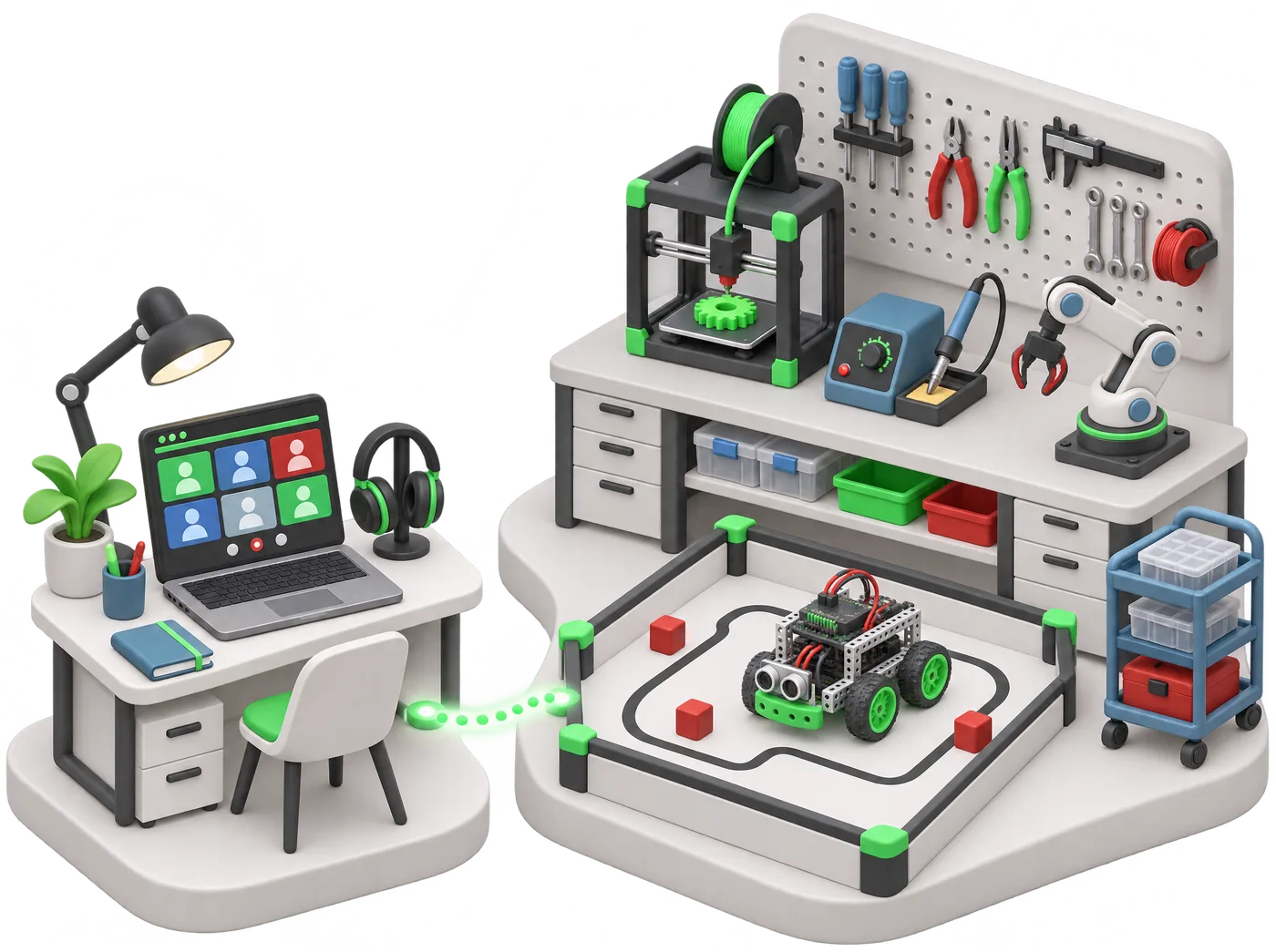 Guide
Parents · K–12 · 4 min
Online or hybrid robotics classes: which is right for your family?
How RoboCloud Online and RoboMix Hybrid compare on hours, hands-on time, travel and price, with a simple way to decide.
Read guide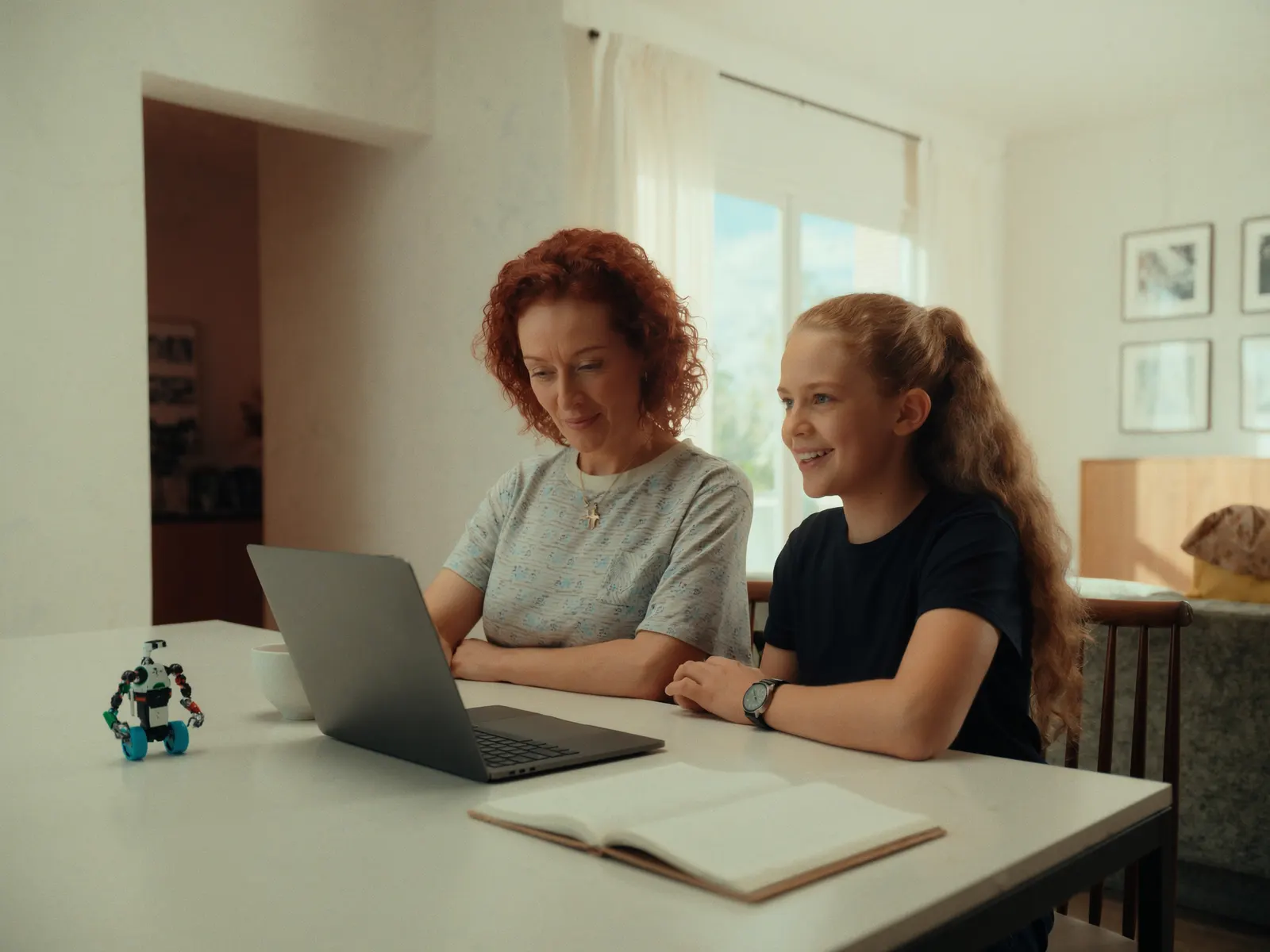 Guide
Parents · Grades K–8 · 5 min
Screen time that builds things: a parent's guide to coding at home
How to tell good screen time from passive screen time, and five ways to support a young coder without being a coder yourself.
Read guide- Printable
Coding · Grades K–5 · Print · 2 pages
Code-a-Path: an unplugged coding game
A printable grid board and command cards. One player is the robot, one is the programmer. No screens, no batteries.
Open & print 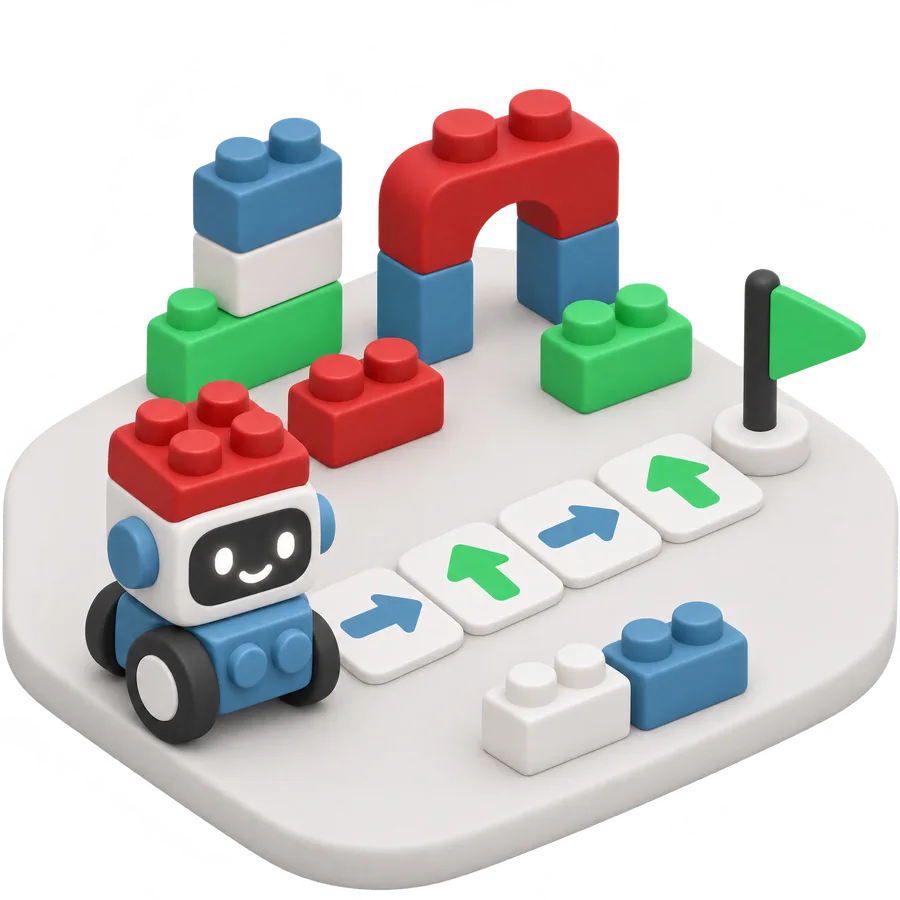 Printable
Robotics · Grades K–5 · Print · 1 page
Robot Parts Bingo
Learn the names of real robot parts — motors, sensors, gears, wheels — with a printable bingo card for the whole family.
Open & print- Printable
Engineering · K–12 · Print · 1 page
Design Your Robot: a blueprint worksheet
A printable engineering sheet: name the problem, sketch the robot, label its sensors and actuators, and plan the first test.
Open & print 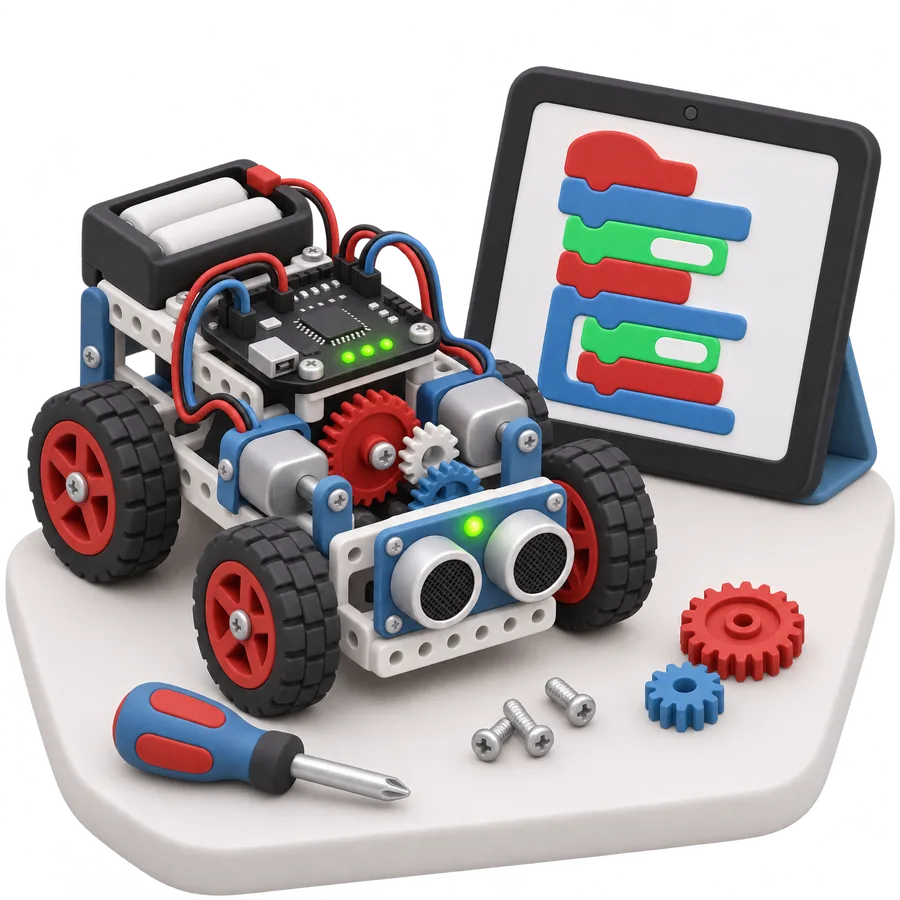 Printable
Electronics · Grades 3–8 · Print · 1 page
Sensor scavenger hunt
Find the hidden sensors in your home — in the fridge, the phone, the car — and work out what each one measures.
Open & print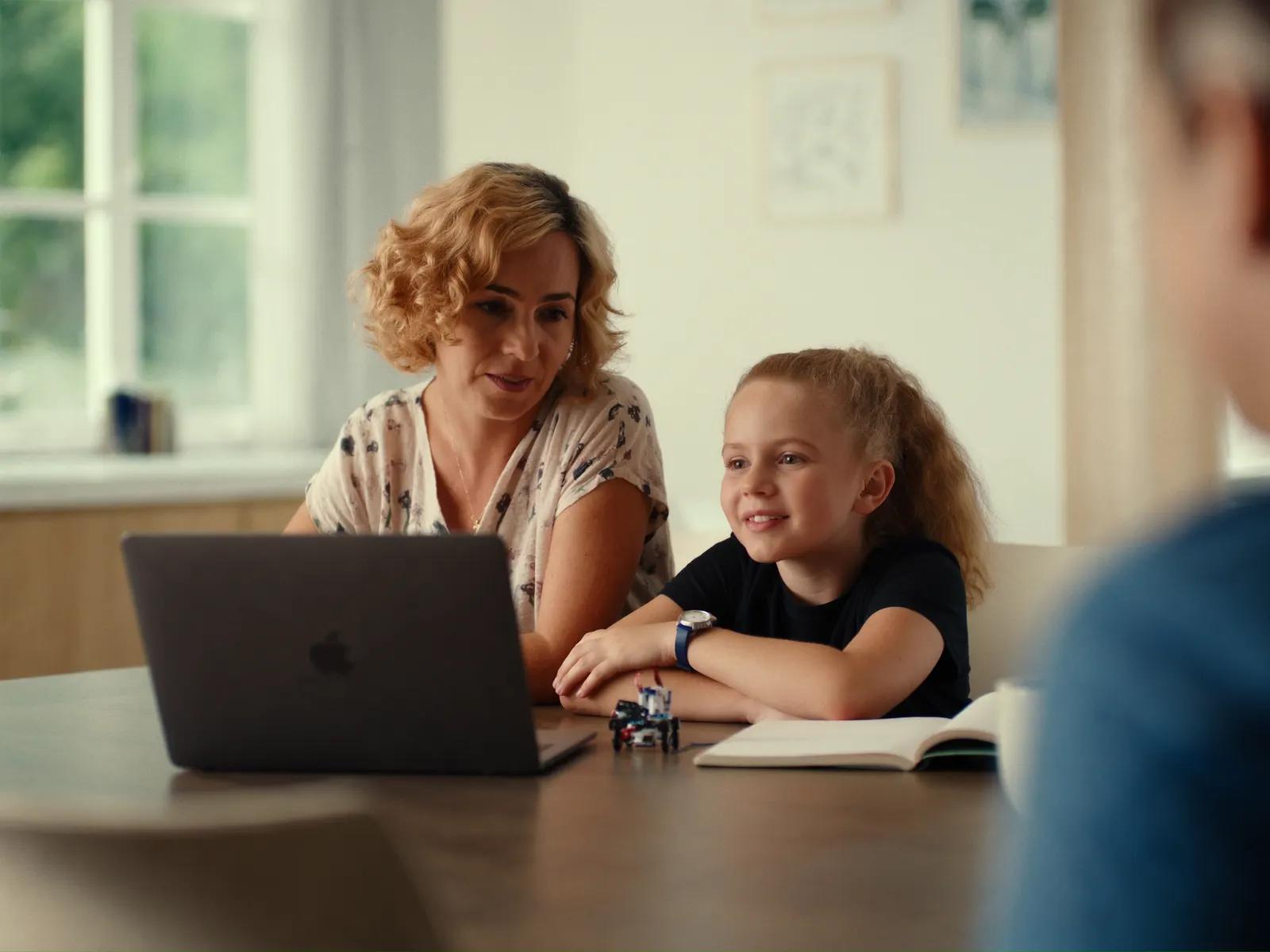 At-home challenge
Coding · Grades K–5 · 20 min
Program a human robot
A 20-minute unplugged game: give a family member exact instructions to make a sandwich, and discover why robots need precise code.
Try it at home- At-home challenge
Engineering · Grades 3–8 · 45 min
Cardboard gripper challenge
Engineer a hand-powered robotic gripper from cardboard and string that can pick up a cup. Learn levers, tendons and iteration.
Try it at home 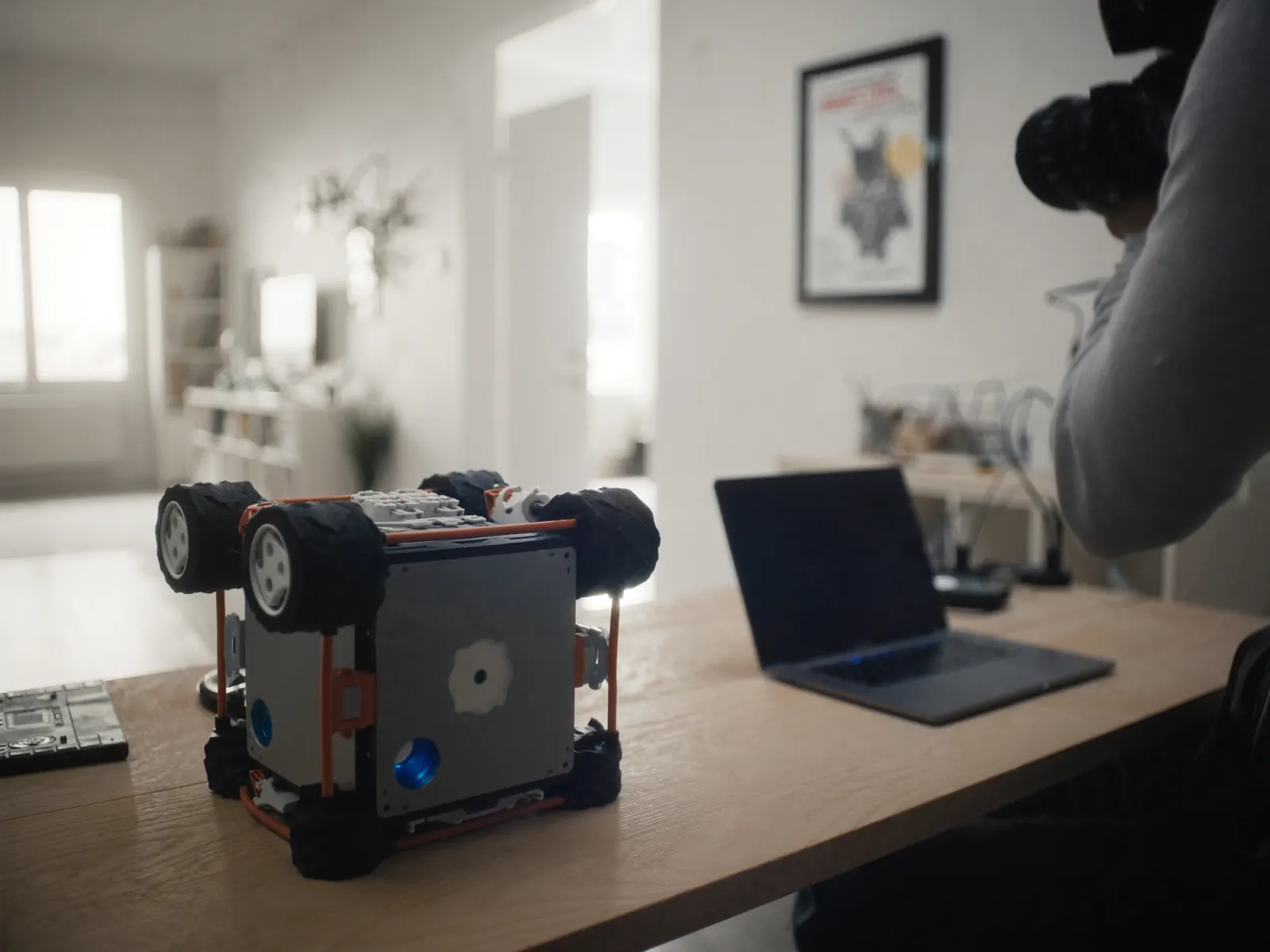 At-home challenge
Electronics · Grades 3–8 · 30 min
Build a bristlebot
A tiny vibrating robot made from a toothbrush head, a coin cell and a small motor. Your first circuit in 30 minutes.
Try it at home At-home challenge
Coding · Grades 6–12 · 25 min
Debug the maze algorithm
A pencil-and-paper puzzle for teens: a maze robot's code has three bugs. Trace it, find them and fix them.
Try it at home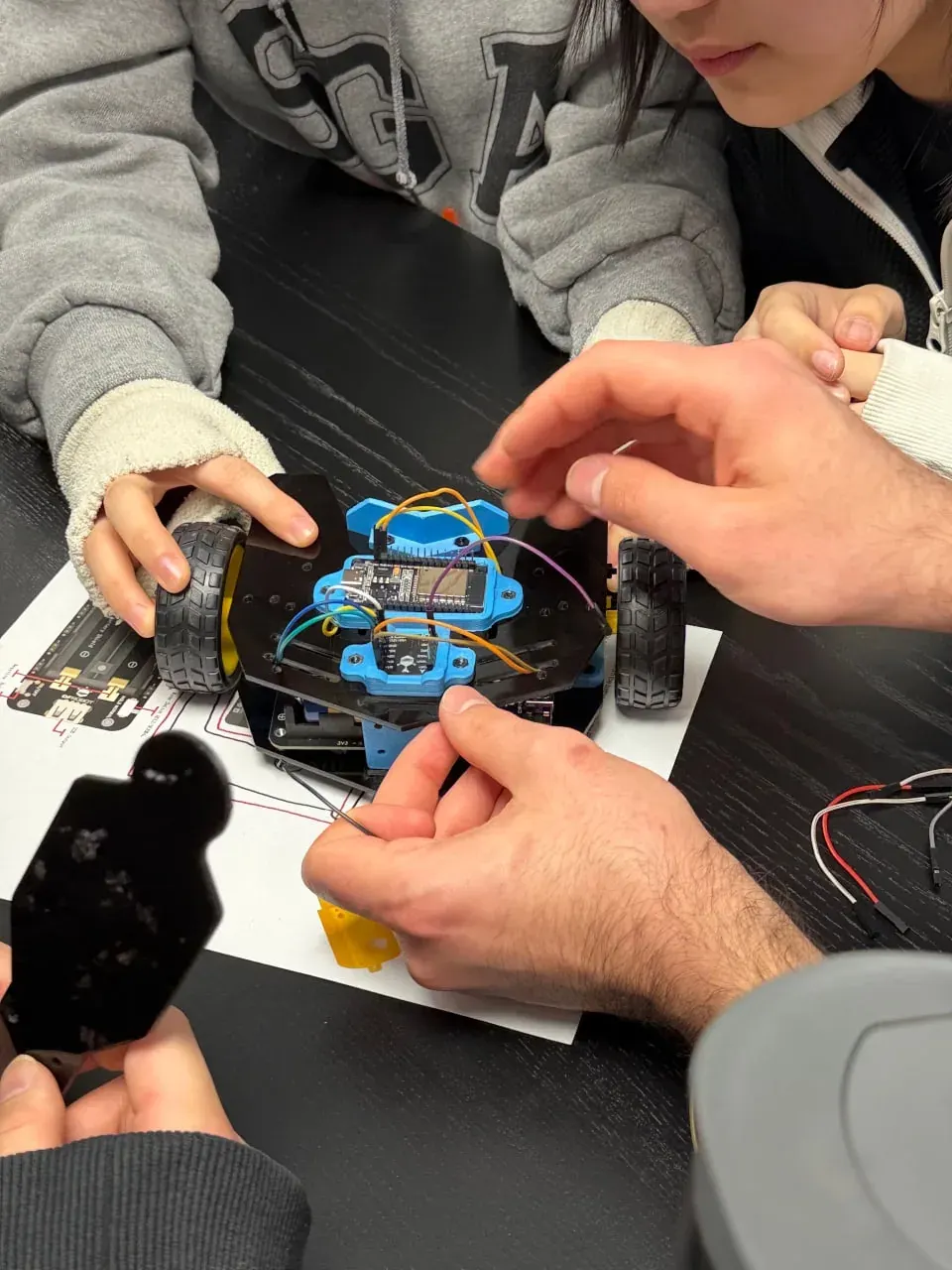 Guide
Electronics · Grades 3–12 · 7 min
Sensors, and what they actually measure
A plain reference to the sensors used in school robotics: what each one really reports, and the ways each one lies.
Read guide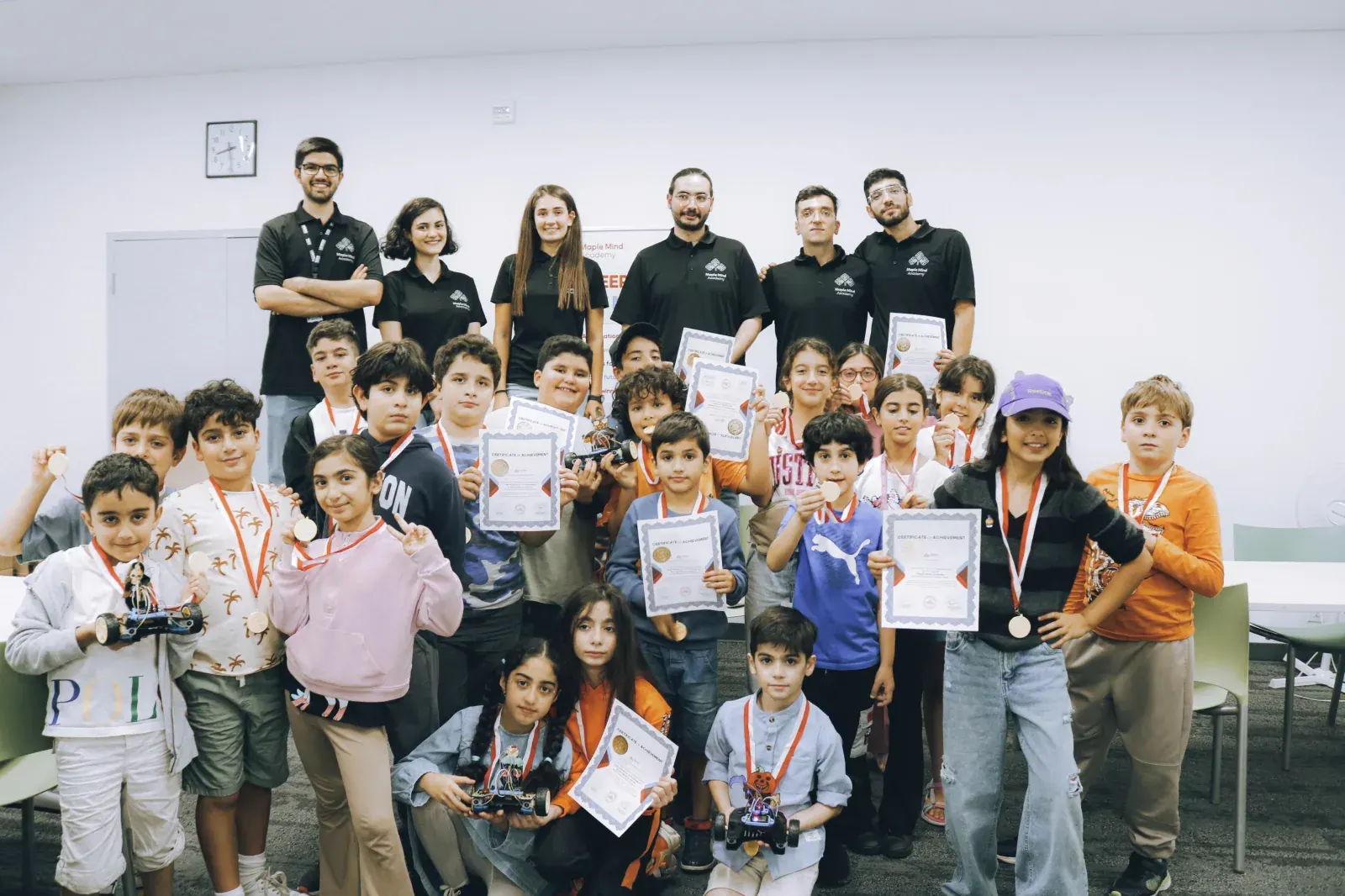 Guide
Start here · K–12 · 8 min
The robotics learning roadmap
What a learner actually learns, in what order, from the first chassis to a competition robot, and how to tell which stage someone is at.
Read guide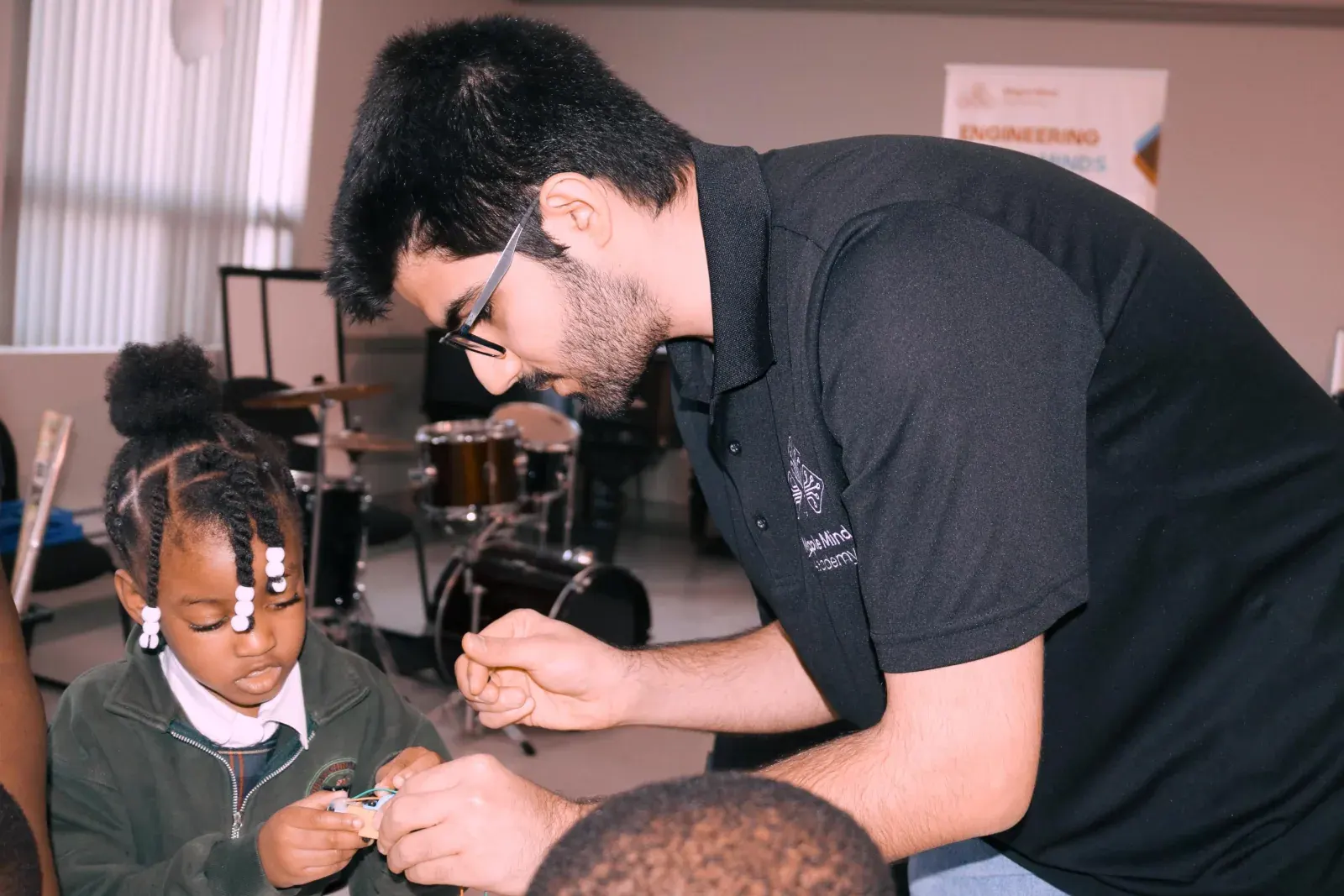 Guide
Parents · K–12 · 5 min
Choosing a robotics program: what to ask
Eleven questions that separate a robotics program with a progression behind it from a set of activities with robots in them.
Read guide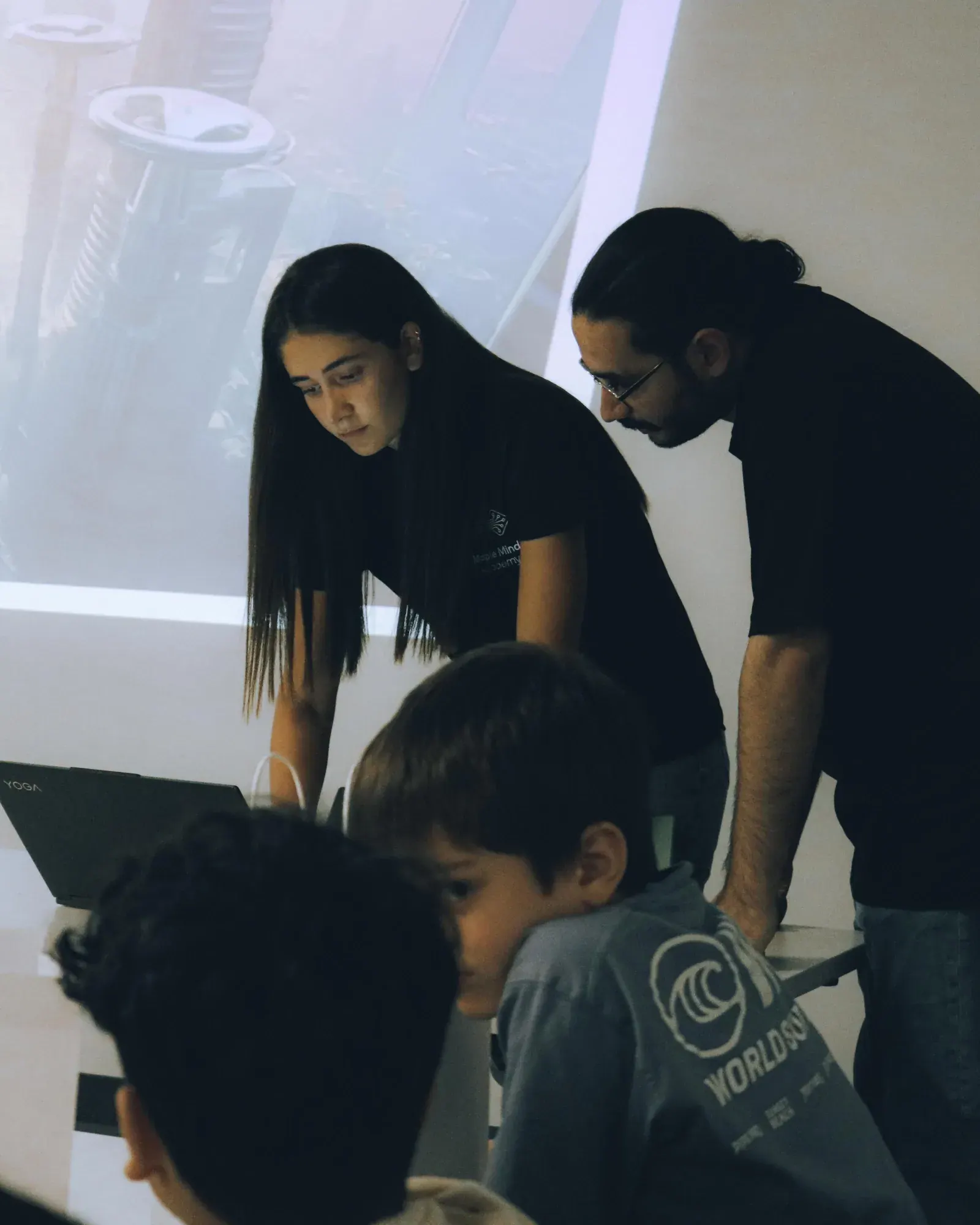 Guide
Electronics · Grades 3–12 · 6 min
Electronics basics and bench safety
Voltage, current and power in the terms a robotics bench needs them, plus the small number of rules that prevent the injuries and the smoke.
Read guide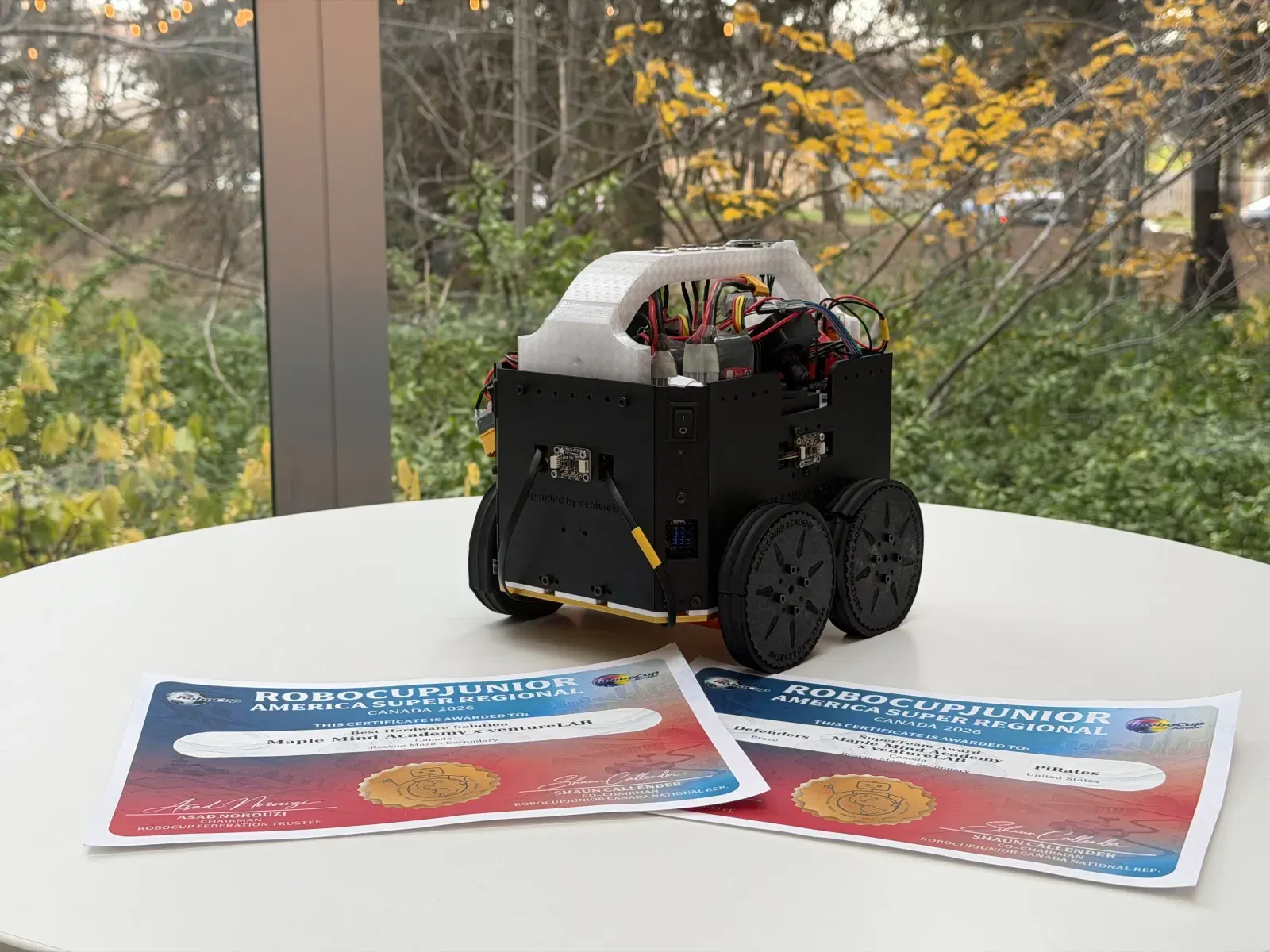 Guide
Competitions · Grades 6–12 · 6 min
Competition preparation checklist
What to settle in the weeks before an event, what to bring, and the failures that only ever happen at the venue.
Read guide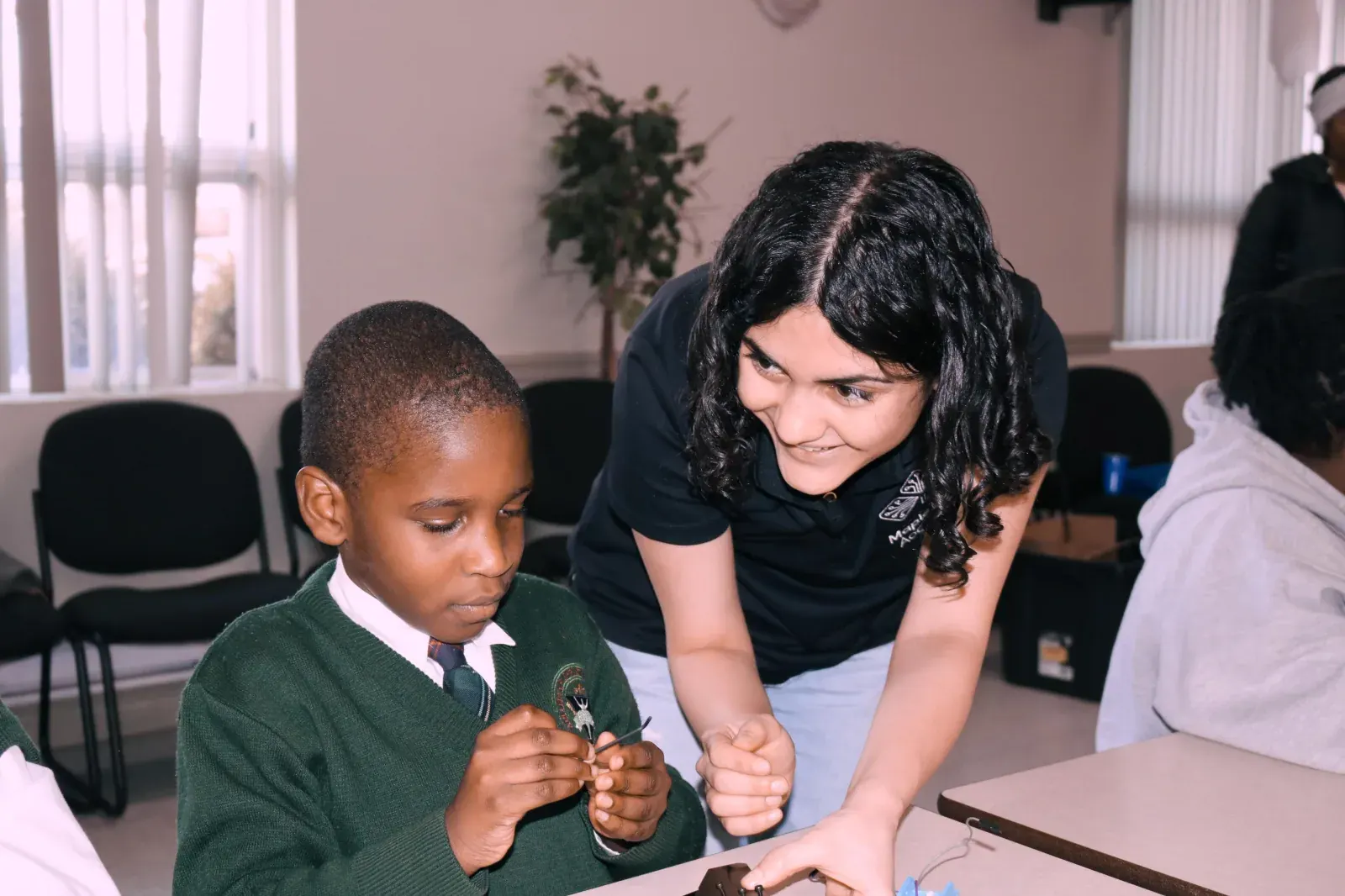 Guide
Coding · K–12 · 5 min
Debugging is the skill, not the obstacle
Most of a robotics session is spent with something not working. That is not the friction around the learning. It is the learning.
Read guide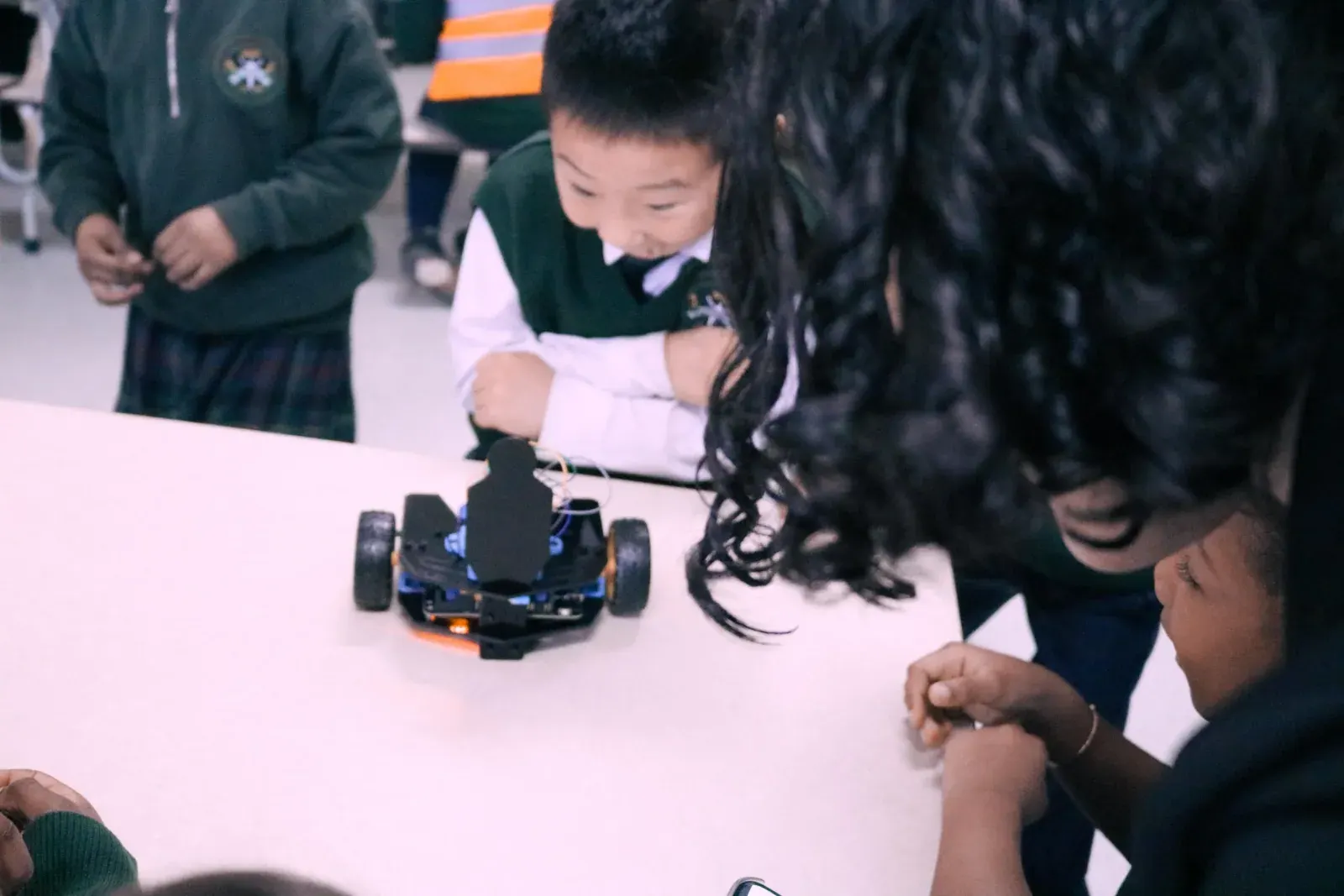 Guide
Robotics · Grades 6–12 · 7 min
From simulation to hardware without losing momentum
Simulation is not a substitute for a physical robot. Used properly, it is the thing that makes the physical robot take half as long.
Read guide Guide
Robotics · Grades 6–12 · 6 min
Teaching autonomy before teaching AI
Sensors, thresholds and decisions come first. The vocabulary can come later, and it lands better when there is something underneath it.
Read guide Guide
Parents · K–12 · 6 min
What real robotics looks like at 12 years old
A kit that works out of the box makes a good photograph. A robot that fails in front of a learner makes an engineer.
Read guide