GuideK–12 6 min
Robotics by grade: what kids can build from Kindergarten to Grade 12
A grade-by-grade map of what children learn and build in robotics, from first sequences in Kindergarten to autonomous robots in high school.
By Maple Mind Academy instructors · Updated
Children can start robotics in Kindergarten. At every age the goal is the same — sense, decide, act — but the tools grow with the child: picture blocks and cardboard at 5, motors and sensors at 8, Python and circuits at 11, autonomy and AI at 14.
Kindergarten to Grade 2: sequencing and simple machines
Young learners program robots with picture-based commands and arrow cards, build ramps and wheels from craft materials, and learn that a robot only does exactly what it is told. The big skill is sequencing: putting steps in the right order.
Grades 3 to 5: motors, gears and first sensors
Students move to block coding with loops, events and conditions, learn why gear ratios trade speed for strength, and read their first sensor values. Typical builds: a rover that stops before a wall, a light-reactive night-light, an obstacle course racer.
Grades 6 to 8: real code and real circuits
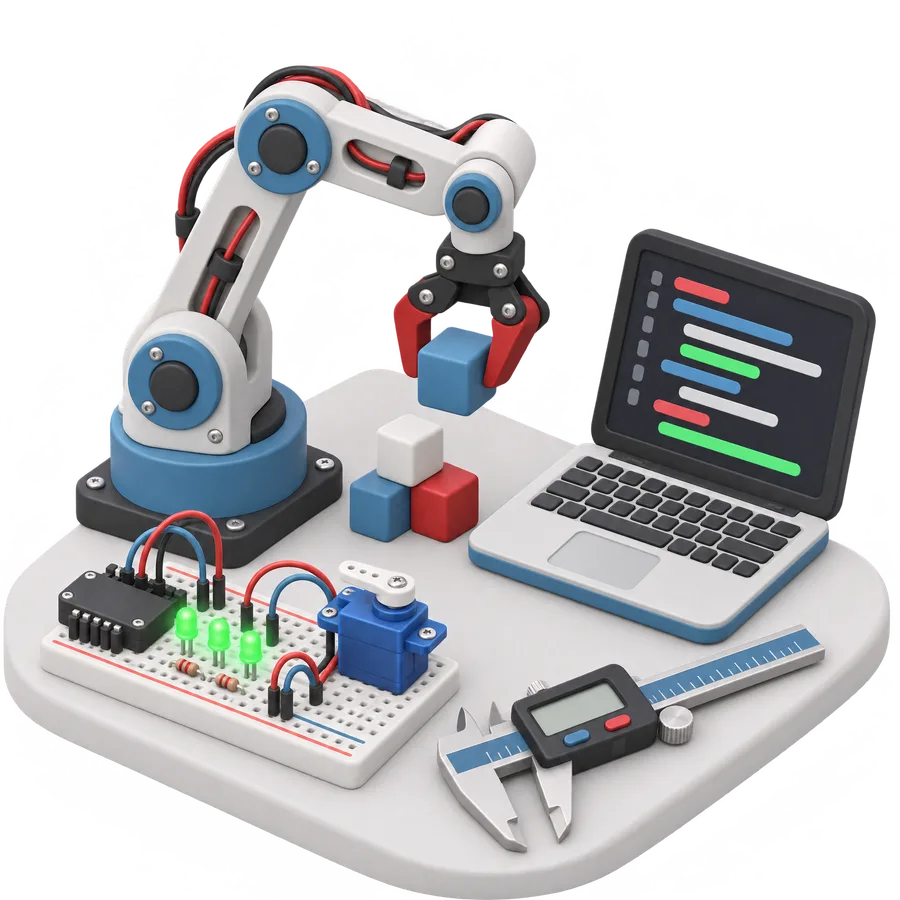
Middle schoolers write Python, wire breadboard circuits with LEDs and servos, and learn to debug methodically. Typical builds: a robotic arm that sorts blocks, a line-following robot, a sensor-driven alarm.
Grades 9 to 12: autonomy, AI and competition
High schoolers design robots that make decisions on their own: state machines, control loops, computer vision and basic AI. Many join competition teams and build engineering portfolios that support university and co-op applications.
Want an instructor to take it from here?
Live online robotics classes for K–12, placed by age and skill.